Friday, December 26, 2025

Chivalry of a Failed Blogger, or How Fictional Fighting High Schoolers Make Me Feel Young Again

I just learned that "gray" is the American English spelling of the color we all know, while "grey" is the spelling all those other former English colonies and territories use. Although I prefer the latter version, I'm obliged to use the former. Guess I'll stop drinking Earl Grey tea while I'm at it. 

Anyway, for a blog titled The Anime Guardians, I write a lot about anime-adjacent hobbies. Let's at least start out with an anime as I write about what I've been up to this fall/winter.

Chivalry of a Failed Knight – Anteiku Anime Reviews

Chivalry of a Failed Knight

Because I'm old, I remember seeing Chivalry of a Failed Knight floating on my Hulu home screen for ages and never watching it. Or did I watch it? The banner always reminds me of The Asterisk War, which I definitely tried to watch once but couldn't get into it. The premises seem kind of similar in any case; maybe pink-haired heroines and fighting schools were the craze in 2015. 

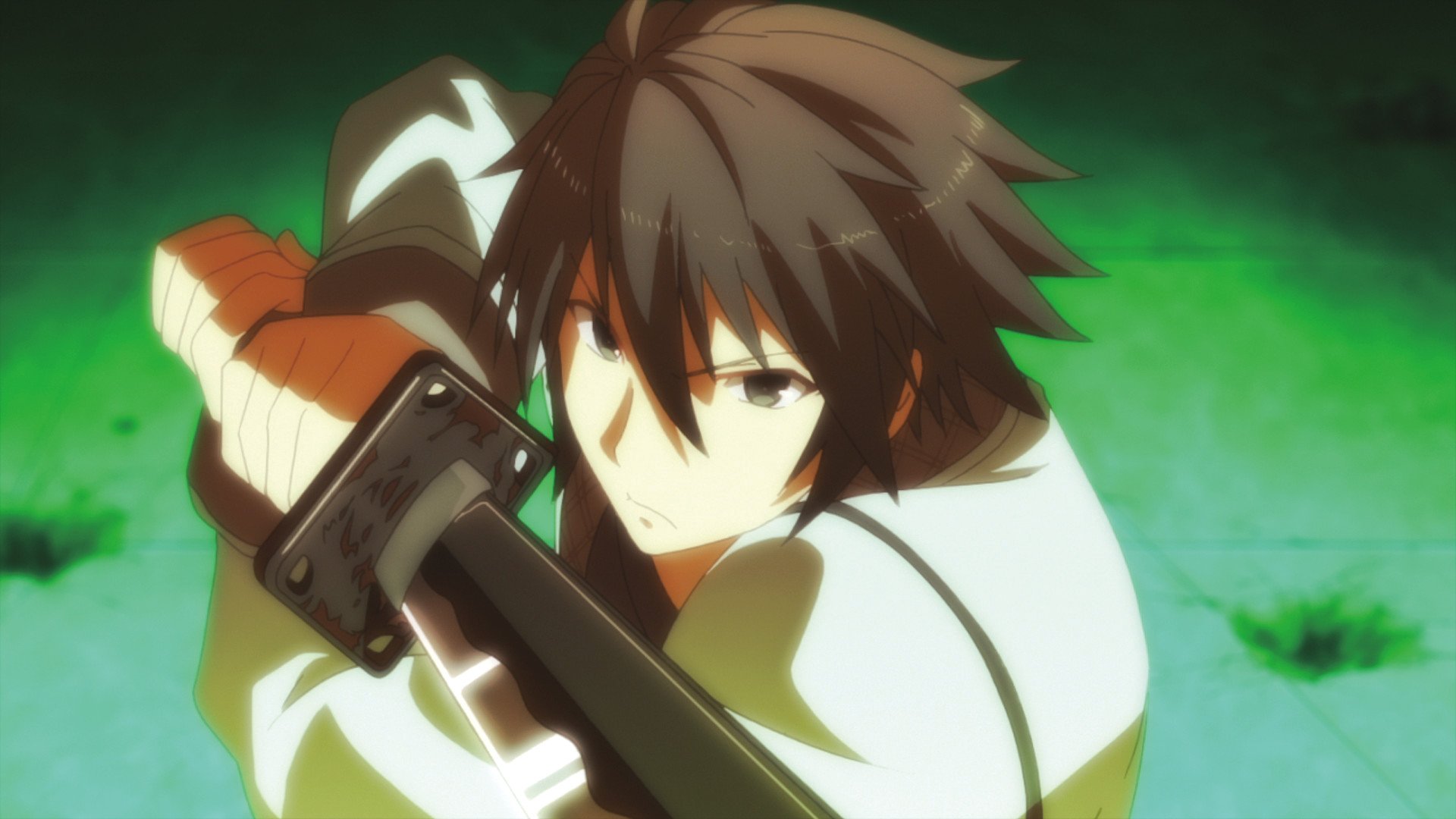
I watched (rewatched?) Failed Knight earlier this year when I was still a new dad and between power naps. It's good stuff! Protagonist Ikki Kurogane is the titular "failed knight" who, despite his superhuman swordsmanship, is considered bottom-of-the-barrel because his mana use isn't flashy or scary or something stupid like that. His family hates him save for a way-too-clingy younger sister who cockblocks the lad as he bumbles into a relationship with Stella Vermillion, the cool transfer student.
Where Does The Chivalry of a Failed Knight Anime End In The Light Novel?

Failed Knight keeps a lot of action at the forefront while making the romance genuinely worth the screen time. (I mean, there's some ecchi stuff cuz it's 2015.) Ikki is the over-analytical type, which  works for his perpetual underdog characterization. Think Dr. Stone's Senku or Death Note's L with sigma-male swag. Like any good fighting school anime, our cast ultimately competes to enter the Seven Stars Battle Festival, a tournament which has global repercussions not fully explained in the show. These details made me read the light novels to continue where the anime leaves off. If you're interested in reading after watching, volume 4 is where to start. I'm really digging volume 5 right now. 


Fate/Hollow Ataraxia Remastered

I recall ending the Switch version of Fate/Stay Night Remastered with a strong feeling of emptiness. Heaven's Feel route was a doozy! Do I think Shirou and Sakura belong together? I get the appeal, but if I were Shirou, loving the person who threatened to wipe out my entire town and to swallow her sister into eternal damnation wouldn't be my first choice. Anyway, I jumped into Hollow/Ataraxia because of a sunk-cost fallacy: why not continue feeling strangely empty and anxious if it means I find out what happens after the Holy Grail War?

The good news: There's a lot of wit and humor to the strange world our characters occupy. The servants are still around. Rider gets a lot of screen time for anyone who likes her; I've come around now that she's an enticing yet menacing recluse who reads all day. The other characters seem to grow jealous of this Shirou x Rider pairing. (This explains a lot of the fan art I've seen.)

The bad news: not enough Tohsaka. She's at the Mage Association abroad, but our central cast talks about her with apprehension, as if she'll appear and crush them with her oppressive attitude. 

I'm also haunted every time Ilya shows up onscreen. I liked her Heaven's Feel incarnation, but Hollow/Ataraxia keeps reminding me that she also wants to shackle Shirou's soul to a stuffed animal toy. I don't understand the brother-sister complex that shows up in otaku fiction. These people need to stop.

Alright, that's what I've got for the end of 2025. I get a month off from school to prepare for next semester, so maybe I'll rot on my couch and catch up on some anime instead. I should probably do some fiction writing as well. Happy holidays, everybody!


Sunday, August 10, 2025

The TCG You've Never Heard Of

Weiss Schwarz!!! It means "black and white" in German, but it's also the name of an esoteric trading card game from Japan. Featuring an assortment of anime, gaming, film, and other pop culture franchises, Weiss is the perfect game for otaku. After eight months of playing, I'm still learning new things and making a fool of myself at the local game shop. 

The end-game for Weiss is simple: do enough damage to your opponent to win. Unlike most TCG, Weiss doesn't have its own stable of characters, and there are no obvious deck-types or elemental advantages to consider. To balance this game, you really have to understand your own deck's character-based gimmicks to create an effective winning strategy. The Seven Deadly Sins anime has one of the lowest-priced trial decks, so that was my first Weiss purchase. I didn't do a good job of learning that deck's tricks; needless to say, I was thoroughly beaten for many weeks.

Is Weiss Schwarz fun? At first, hell no. I didn't win a game until I put together an entirely different deck: a Fate/Stay Night one based on character Rin Tohsaka. The deck is a little underpowered compared to others, but Rin's low attack damage is remedied by conditional buffs to beat tougher opponents. I won my first game with that Fate deck...before losing many more matches.

Rin Tohsaka: best girl in Fate franchise. 

Weiss isn't nearly as popular as Pokemon, Yu-Gi-Oh, or Magic the Gathering, so we're a small group at the back of the card shop on Sundays. When the Pokemon or Magic tournaments get too large, Weiss is cancelled for the day so there are more tables available. Because of the game's obscurity, it's difficult to obtain Weiss cards unless you preorder them early. On the other hand, there are no scalpers lurking around supermarkets and vending machines to buy all the stock at once, which has become a serious problem for Pokemon players. 

Why do I play? It's nice to be part of a community, no matter how small. It's nice to have new experiences. It's nice to get out of the house, play cards, and return home in time to eat dinner with my wife and kid. I think my record is 3-25 or something terrible like that; I picked up two of those wins during my last playthrough, so I've made progress! If I win another game before the end of the year, I'll be happy.

Tuesday, July 8, 2025

X-Men: The Manga and its No Good, Very Weird Government

I bought X-Men: The Manga Remastered the other day at Barnes & Noble. Narratively, it starts where the 90s animated series begins, on Jubilee as she runs from Sentinels that hunt an emergent mutant population. In order to end these discriminatory attacks, the X-Men make their way to a quasi-governmental facility that stores dossiers on mutants around the country. At first I thought, "Why would you have to go to a facility to do that? Can’t you just hack into their systems remotely?" Then it occurred to me: this story is set in the 90s. I’d almost forgotten what that world was like back then.

Paper documentation, especially at the government level, is a challenge I saw firsthand while working at a municipal court. My days were spent entering information, scanning, and filing it away for hours at a time. Need to issue a search warrant? Fax the judge. Need to collect payments? Send a certified letter. On the federal level, the government has tried to reduce paper processes: the Paperwork Reduction Act, the Paperwork Elimination Act, and several memoranda in recent decades (which points to the truism everyone knows by now: government is extremely slow to change). In the essay "The Filing Cabinet," Craig Robertson describes the archaic — and analog — filing process required for American federal workers to get paid, which can involve sifting through some 28,000 filing cabinets. Should everything be digitized nowadays? Can that be done? Who knows.

Here’s another weird example of inefficiency: SENTINELS. I didn’t think about how goofy these giant robot killing machines were growing up, but now I read X-Men and wonder, “How many are there? How much did the government pay these subcontractors to build them? What are the repair costs?”Considering there are no giant robots (we’re aware of) for commercial or military use, the only comparable product I’ve found is this $3,000,000 Tsubame Industries mech that resembles a really slow Armored Core. In a world where ICE raids are regularly conducted against illegal and migrant populations in the US, it’s obvious that a real government would spend big bucks to find perceived threats. Is this a good investment of our money? All I’ll say is the cost-benefit analysis of hunting mutants is clearly based in something other than a balanced budget. 

X-Men: The Animated Series. 1992. Marvel Entertainment Group.

Finally, the X-Jet is clearly an SR-71 Blackbird, an older stealth plane contracted by the government from Lockheed Martin. How this wound up in Charles Xavier’s hands depends on what version of the story we’re reading: he “obtained “ it from SHIELD, or Hank McCoy (aka Beast) built it, or it’s a modification of Xavier’s private jet. All scenarios imply massive security leaks pertaining to the design of a military stealth craft. As a telepath, Xavier could have easily wound up with the information needed to steal the plane or its schematics, but it also seems like a government fully aware enough to build giant robots for mutant hunting could also put more efforts into its security apparatus. 

Which brings us full circle to the X-Men raiding that facility for mutant records. The universe our heroes occupy may be full of hateful xenophobia, but luckily, the government gestapo is incredibly good at wasting time and money.